Preventive maintenance plan for injection molds: per-shift, shot-count and annual checklist
Mold failures rarely come without warning; clogged vents, worn ejector pins and scaled cooling channels give small signs first. A three-level, record-based preventive maintenance plan: per shift, by shot count and annual overhaul.
An injection mold rarely breaks down "all of a sudden". First flash appears, then one cavity starts sticking, the cycle grows by a few seconds, and one morning an ejector pin breaks. The way to catch these signs before the failure is to maintain the mold by plan and by record, not by breakdown.
A good plan has three levels: a quick check every shift, periodic maintenance at a set shot count, and a major overhaul with the mold removed from the press.
1. Every shift (5–10 minutes)
Done by the operator or setter while the mold is in the press:
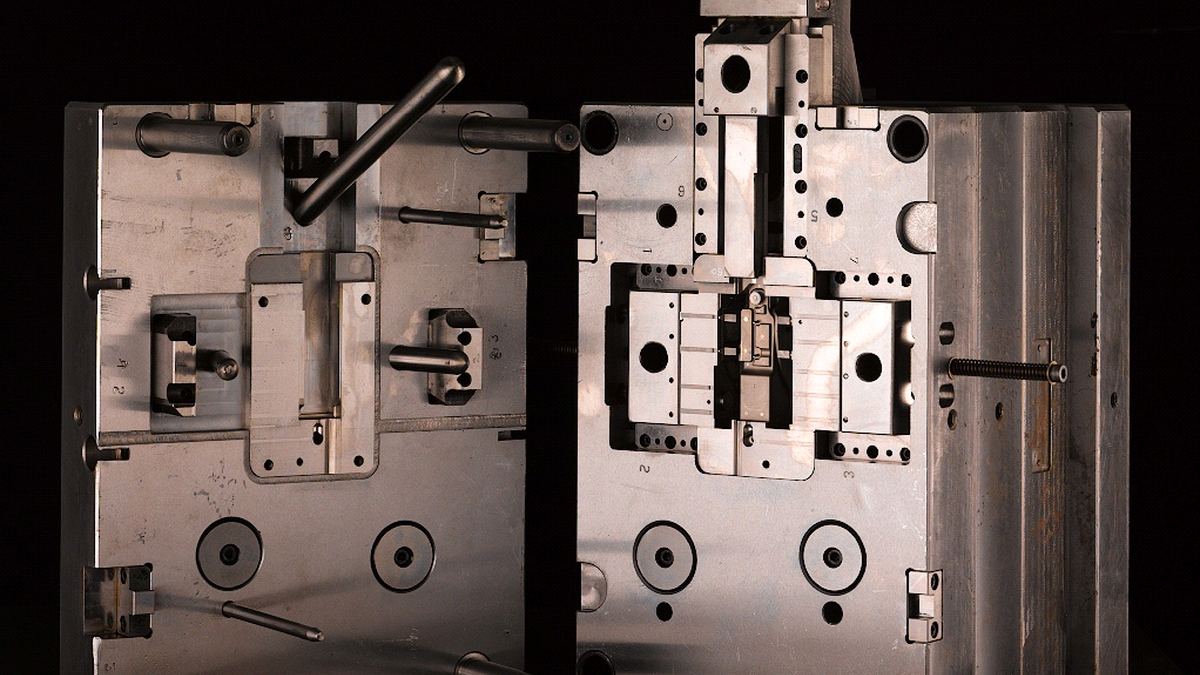
- Parting line: Any burning, stuck part fragments or plastic build-up? A small fragment trapped on the parting line can crush the surface on closing and cause permanent flash.
- Vents: Darkening and deposits at the edges show that vents are starting to clog. A clogged vent means burn marks and short shots; see mold venting.
- Part check: Flash, short shot and ejector pin marks on the first and last part. Flash is not always a process problem; it can be the first sign of a worn parting line.
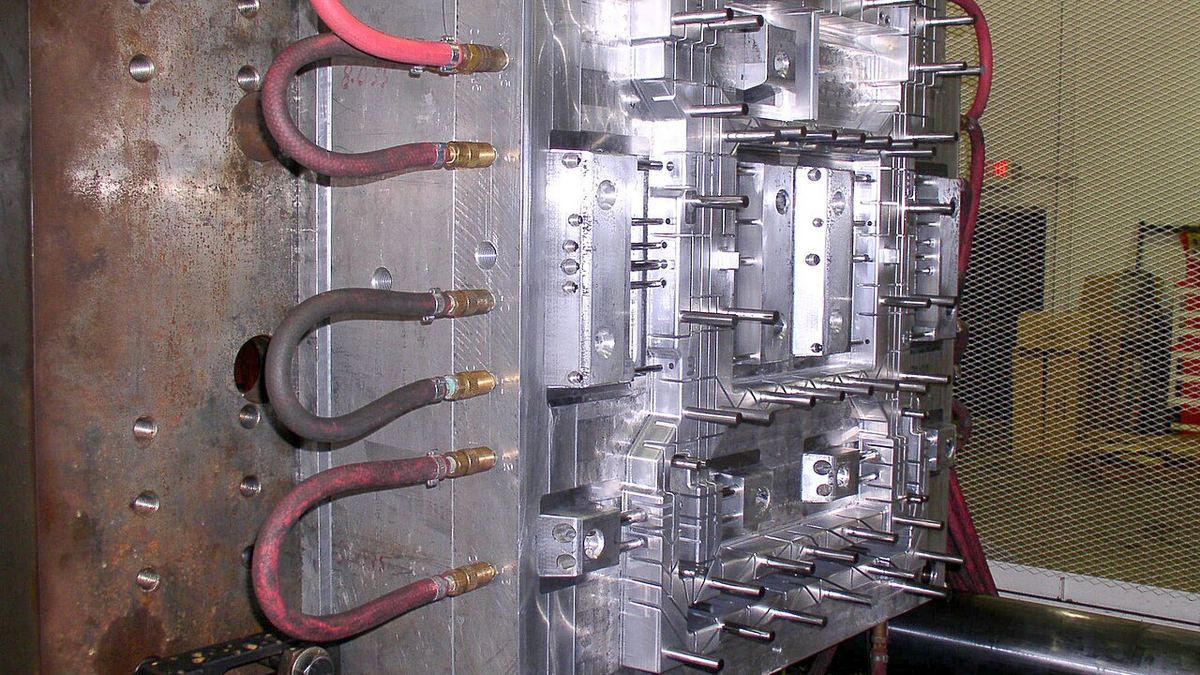
- Water connections: Leaks, crushed or kinked hoses, the inlet–outlet temperature difference.
- Moving parts: Strained noise from cores and slides, dry-running guides.
2. Periodic maintenance by shot count
The interval depends on the mold class, the material and the cycle. With glass-filled, flame-retardant or gassing materials (such as POM and PVC) the interval is kept shorter. A typical starting scheme:
- Cleaning vents and the parting line: Based on deposit build-up; on many molds every 25,000–50,000 shots.
- Ejector pins, guide pins and bushings: Cleaning, checking for wear and scoring, lubrication suitable for the mold. Too much grease contaminates parts; too little makes pins seize.
- Slides and cores: Wear plates, locking blocks, springs.
- Hot runner: Heater resistance and thermocouple readings, leakage at the nozzle tips.
Your own records give the right interval: after how many shots did the same problem come back after each job?
3. Major overhaul (annually or at a set shot count)
The mold is removed and taken to the bench:
- All moving parts are dismantled, cleaned and measured for wear; springs, O-rings and seals are replaced.
- Cooling channels are checked for scale and corrosion, and chemically flushed if needed. A scaled channel reduces both flow and heat transfer; the cycle grows without anyone noticing. A simple test: measure and record the channel flow rate at the same pressure before and after maintenance. For the flow you need, see cooling water flow rate and Reynolds number.
- Critical dimensions (cavity, core, gate) are checked; slow dimensional drift on the part often comes from here.
When putting the mold into storage
Blow the water channels out with compressed air, clean the mold surfaces and apply rust preventive, and store the mold closed together with the last part. The last part is the best answer to "how was this mold running?" on the next production run.
Mold class and expected life
The SPI classification gives a rough framework for mold life: Class 101 is built for over one million cycles, Class 102 for up to one million, Class 103 for under half a million and Class 104 for under one hundred thousand. A higher-class mold may allow longer maintenance intervals, but no mold reaches that life without maintenance. For the effect of steel choice and hardness on life, see choosing mold steel.
Without records the plan does not work
The real strength of preventive maintenance is in the records: which mold, how many shots, what was done, what changed, which failure came back. If the same cavity sticks every 40,000 shots, the problem is not maintenance but cooling or design. You only see that when the records are side by side.
You can use the free mold log for this: trial, production, maintenance and failure records per mold, a maintenance reminder linked to the shot counter, and a "what changed" comparison against a known-good reference process, all in one place. If a failure has turned into a defect, try the defect diagnosis wizard to narrow down the cause.
Is something missing or wrong in this article? .