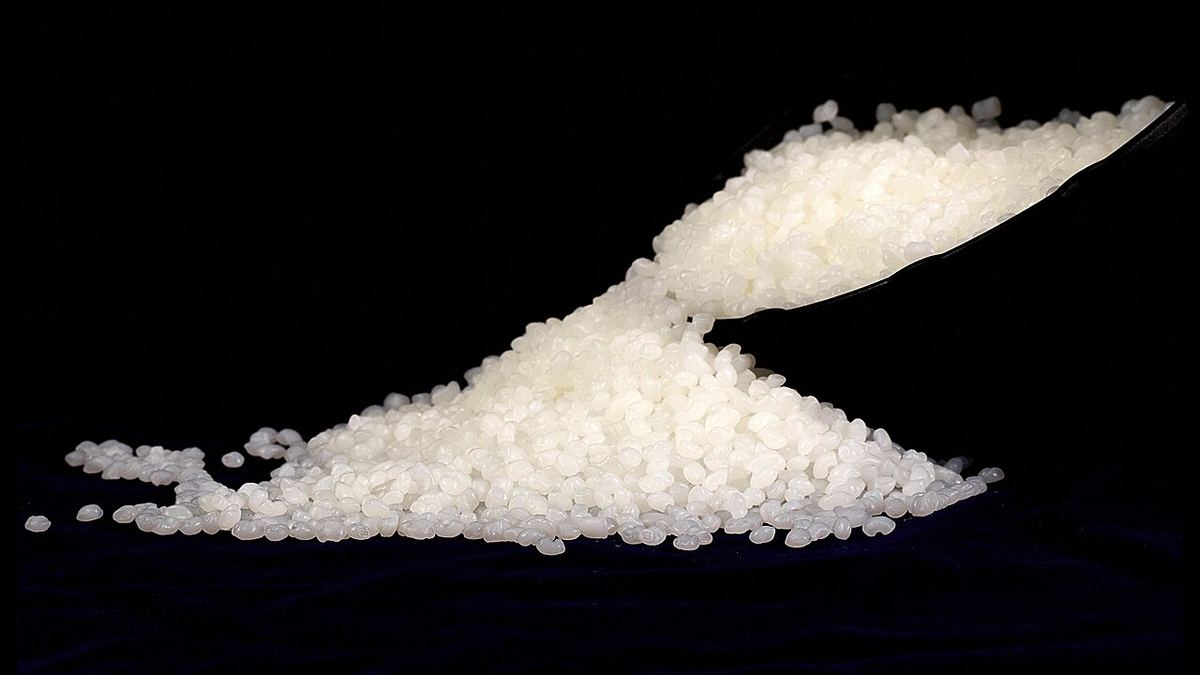
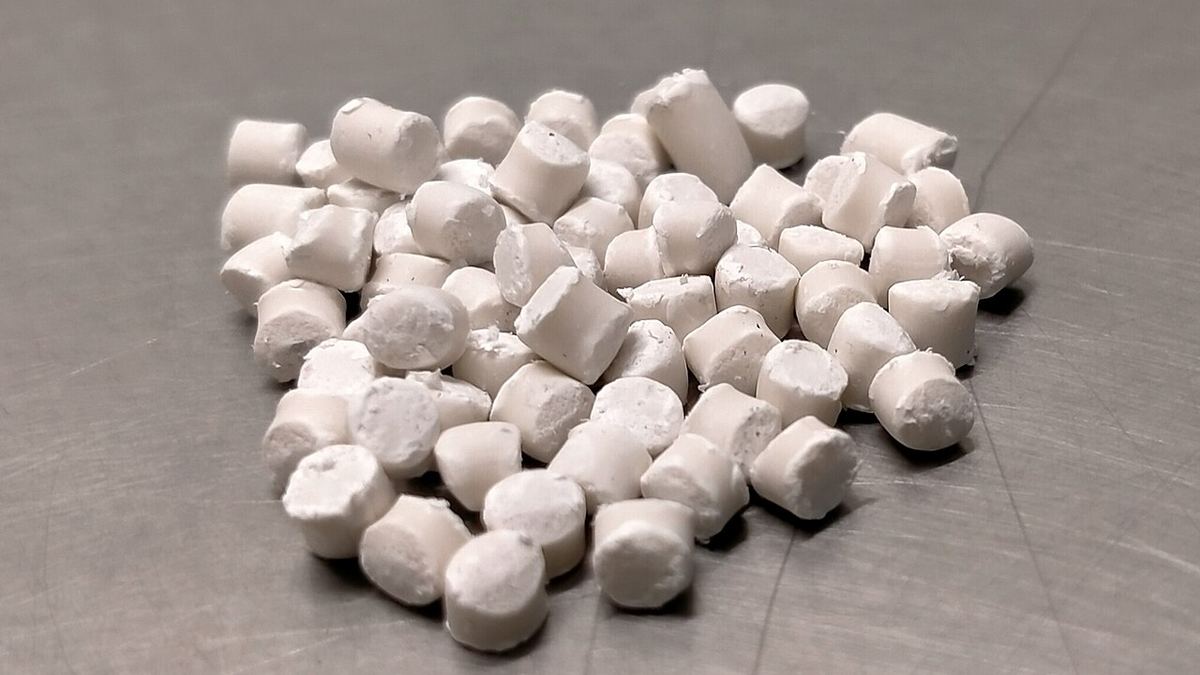
Amorphous and semi-crystalline polymers: why do they need different injection settings?
ABS and PP behave differently even on the same machine with the same mold. How amorphous and semi-crystalline materials differ in melting, shrinkage, mold temperature, holding and post-shrinkage, and what that means for the setup.
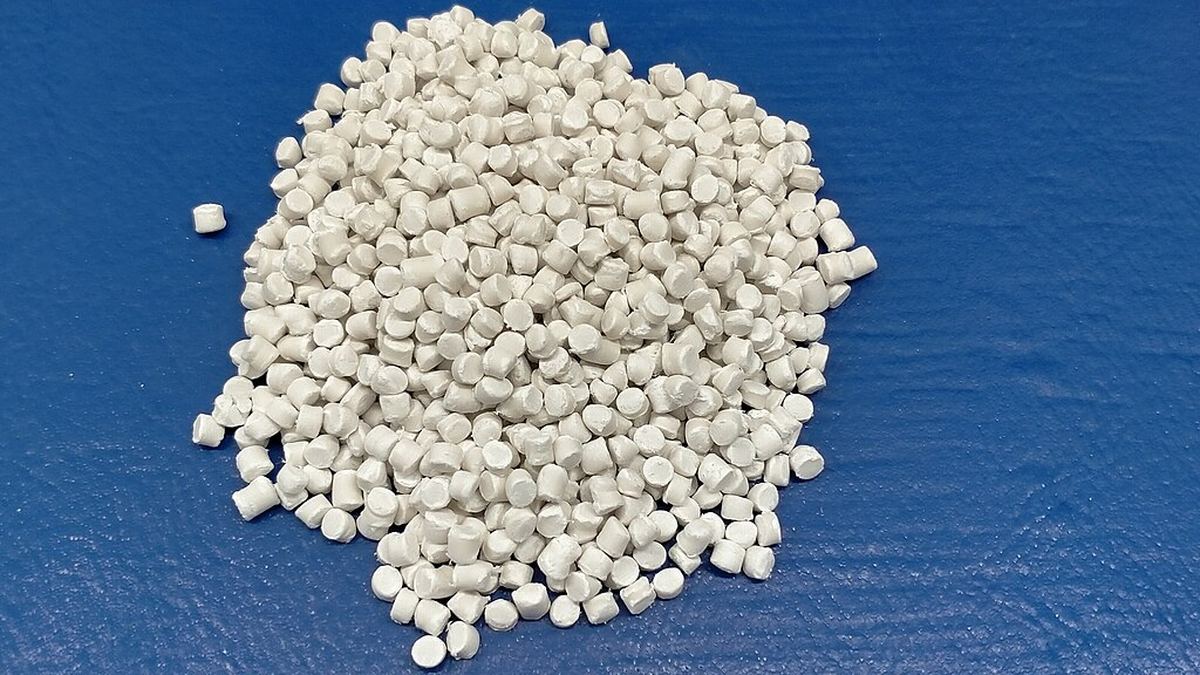
Thermoplastics fall into two main groups according to their molecular structure: amorphous and semi-crystalline. This distinction is not a laboratory detail. It determines the shrinkage allowance, the mold temperature, the holding time and how much more the part will shrink after leaving the mold. It also explains why the setup has to be rebuilt when switching from one material to the other.
The basic difference
In amorphous materials the chains are disordered and entangled. When heated they soften at a certain temperature (the glass transition temperature, Tg) and become gradually more fluid over a wide range. There is no sharp melting point.
In semi-crystalline materials some of the chains form ordered crystalline regions as they cool. These crystals melt at a specific temperature (the melting temperature, Tm). Melting them takes extra energy (the heat of fusion), and on cooling there is a marked loss of volume as they crystallize.
| Amorphous | Semi-crystalline | |
|---|---|---|
| Examples | PS, ABS, SAN, PC, PMMA, PC/ABS, PVC | PP, PE, PA6, PA66, POM, PBT, PET |
| Melting | Softens over a wide range | Sharp melting point |
| Typical shrinkage | Low, about 0.4–0.8% | High, about 1–2.5% |
| Direction of shrinkage | Little affected by direction | Large difference between flow and cross-flow direction |
| Transparency | Possible (PC, PMMA, PS) | Usually opaque or translucent |
| Chemical resistance | More sensitive to stress cracking | Usually better |
The shrinkage values are general ranges for unfilled grades; check the material data sheet for exact values. See Shrinkage: typical values by material
Effect on the setup
Melt temperature and screw. Semi-crystalline materials do not flow below their melting point, and the heat of fusion means they need more energy in the barrel. Set the barrel profile within the data sheet range without keeping the feed zone too cold. Once molten they usually have low viscosity, so they are more prone to flash and nozzle drool than amorphous materials.
Mold temperature. With amorphous materials mold temperature mainly affects surface quality, internal stress and filling. With semi-crystalline materials it also determines the degree of crystallinity. In a cold mold crystallization is incomplete; the part leaves the mold on size but keeps shrinking over the following days. With materials such as POM, PBT and PA, the warm mold recommended by the data sheet is needed for dimensional stability, even if it seems to lengthen the cycle at first.
Holding. Because the volume loss of semi-crystalline materials is large, holding pressure and time have a much greater effect on dimensions. Adding material until the gate freezes becomes critical. Setting holding time with a gate freeze study is especially important for these materials.
Cooling and ejection. Semi-crystalline materials stiffen quickly once they crystallize, so they can often be ejected relatively hot. Amorphous materials stay soft until they drop below Tg; ejected too early, they show ejector marks and deformation.
Warpage and post-shrinkage
In semi-crystalline materials the difference between shrinkage in the flow direction and across it is large, and glass fiber increases it further. This is why warpage is more common in flat and long parts. Gate location, uniform wall thickness and balanced mold temperature are central to both design and setup with these materials.
Shrinkage after ejection (post-shrinkage) is also pronounced in semi-crystalline materials. Check dimensions after letting the part rest for at least 24 hours; with materials such as PP and POM, dimensions can change for longer.
When changing material
- When switching from amorphous to semi-crystalline (for example PP instead of ABS), the mold's shrinkage allowance may not fit. First find out which material the mold was built for.
- The need for drying is independent of the structure: PC and ABS (amorphous) and PA and PBT (semi-crystalline) absorb moisture; PP and PE do not. See Material drying guide
- When purging, check that the processing temperatures of the two materials are compatible. See Purging guide
For typical processing temperatures and drying values of materials, see the material pages.
Is something missing or wrong in this article? .