Shrinkage: typical values by material and the right order for hitting dimensions
Why do PP and ABS shrink so differently, and when a dimension is off, do you touch the process or the mold first? Typical shrinkage ranges, the settings that affect them, and steel-safe correction.
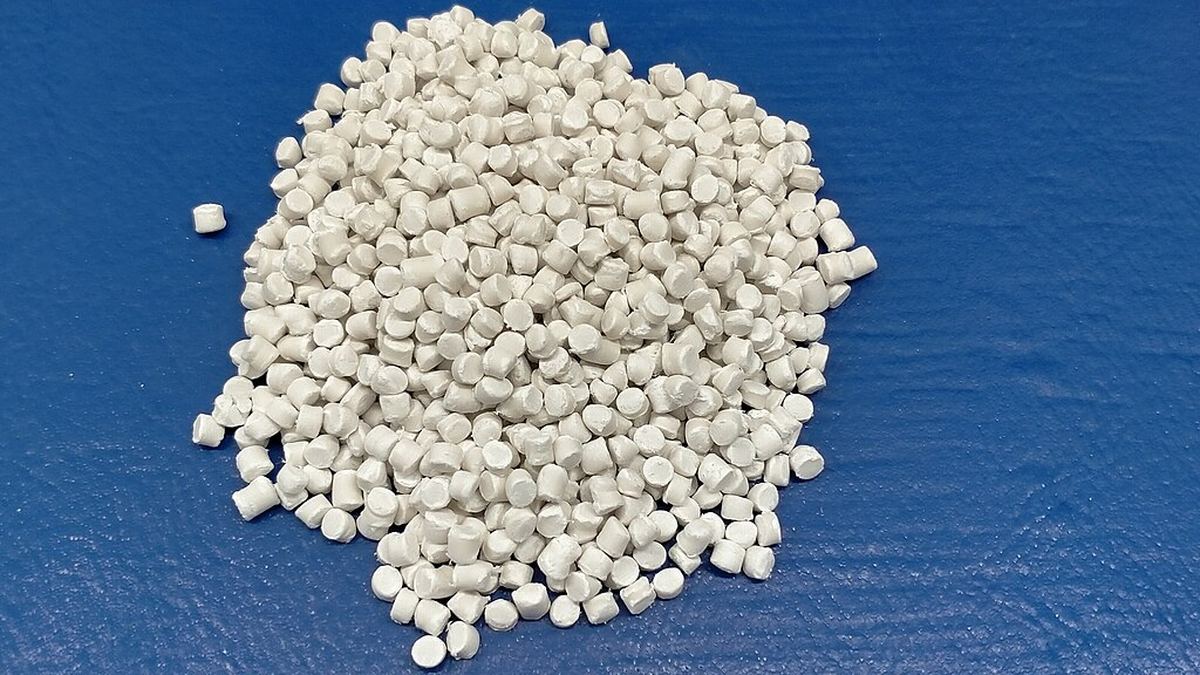
Plastic loses volume as it cools in the mold, so the part comes out slightly smaller than the cavity. This is shrinkage, and machining the mold oversize to compensate is the shrinkage allowance. Most dimensional problems come either from a wrongly chosen allowance or from an unstable process that changes shrinkage from shot to shot.
Typical shrinkage ranges by material
The values below are typical catalog ranges for unfilled standard grades. Your own grade's manufacturer data sheet is authoritative; grades within the same family differ widely.
| Material | Typical shrinkage (%) | Note |
|---|---|---|
| PS (GPPS) | 0.3–0.6 | Amorphous, low and stable |
| ABS | 0.4–0.7 | Amorphous |
| PC | 0.5–0.7 | Amorphous |
| PMMA | 0.2–0.8 | Amorphous |
| PP (homopolymer) | 1.0–2.5 | Semi-crystalline, very sensitive to wall thickness |
| HDPE | 1.5–3.0 | Semi-crystalline |
| LDPE | 1.5–3.5 | Semi-crystalline |
| PA6 (dry) | 0.7–1.5 | Swells somewhat as it absorbs moisture |
| PA66 (dry) | 0.8–2.0 | Swells somewhat as it absorbs moisture |
| POM | 1.8–2.5 | Semi-crystalline, noticeable post-mold shrinkage |
| PBT | 1.5–2.2 | Semi-crystalline |
| PA66 + 30% glass fibre | ~0.2–0.5 in flow / ~0.6–1.0 across | Direction-dependent, prone to warpage |
Rule of thumb: amorphous materials (PS, ABS, PC, PMMA) shrink little and evenly; semi-crystalline materials (PP, PE, PA, POM, PBT) shrink more and are more process-sensitive. Glass fibre reduces shrinkage but creates a difference between flow and cross-flow directions.
What changes shrinkage?
- Wall thickness: thick areas shrink more. Different thicknesses shrink differently, which turns into warpage. See Causes of warpage
- Holding pressure and time: packing melt into the cavity until the gate freezes reduces shrinkage. If holding ends before gate freeze, dimensions come out small and variable.
- Mold temperature: for semi-crystalline materials a hotter mold means more crystallisation and shrinkage in the mold but less post-mold shrinkage. A cold mold can hit the dimension on day one and drift over the following weeks.
- Melt temperature: hotter melt generally shrinks more.
- Gate size and location: a small or badly placed gate freezes early and cannot feed the thick section.
- Orientation: with glass fibre and long flow paths, flow and cross-flow directions shrink differently.
Post-mold shrinkage and moisture
With PP, PE and POM, shrinkage continues for some time after ejection. Measure 24–48 hours after molding at room conditions. Polyamides, on the other hand, swell somewhat as they absorb moisture; a PA part measured dry will measure differently a few days later. Agree the measurement condition (time, temperature, humidity) with the customer in writing.
If the dimension is off: the right order
- Stabilise the process first. Run a gate freeze study, set holding time accordingly and settle the V/P switchover. See V/P switchover and holding
- Check repeatability. If dimensions scatter widely between consecutive shots, the problem is process instability (cushion, mold temperature, drying), not the allowance.
- Wait and measure. Measure several parts after 24–48 hours under the agreed condition.
- Small correction via the process. A few tenths of a millimetre can be adjusted with holding pressure and mold temperature, but do not push the process to its limits to rescue the part.
- Correct the mold. If the deviation is systematic, change the mold dimension.
Steel-safe machining: on a new mold, leave critical dimensions on the side where correction means removing metal: cavity slightly small, core slightly large. Removing steel is easy; welding and re-machining is expensive and risky.
For drying and processing notes per material, see the Materials page.
Is something missing or wrong in this article? .