In-mould labelling (IML): how it works and what to watch in the mold and the process
In IML a printed label is placed in the cavity and the melt fuses with it, removing the separate labelling step. Label material, ways of holding the label, gate location, cooling balance and the most common defects.
In-mould labelling (IML) is a method in which a printed plastic label is placed in the cavity before injection and the melt fuses with it, so the label becomes part of the part. When the mold opens, the part comes out with its label; no separate labelling or printing step is needed. The most common use is thin-wall food packaging (yoghurt, ice cream and margarine tubs and lids), but it is also used for technical parts and appliance panels.
How it works
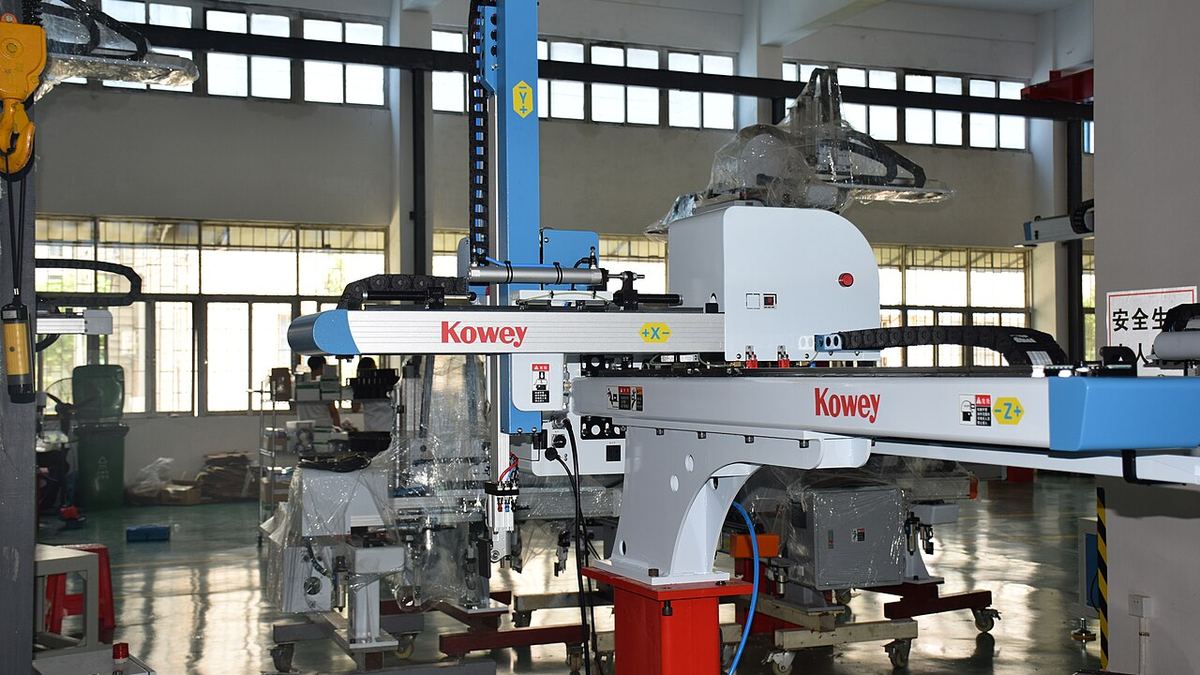
- A robot picks a single label from the label magazine by vacuum.
- While the mold is open, the robot enters the cavity and places the label on the mold surface.
- The label is held on the mold surface by vacuum channels or by an electrostatic charge.
- The mold closes and the melt fills behind the label. The hot melt melts the inner face of the label and the two layers fuse.
- The mold opens, the robot takes out the part and usually places the next label in the same movement.
In thin-wall packaging the cycle is often only a few seconds. Robot speed and keeping the label in the right place in the mold are therefore as decisive as the mold itself.
Label material
- The label is usually from the same material family as the part. A PP container uses a PP-based label (mostly oriented PP film). The part then consists of one material, which makes recycling easier.
- The back of the label must be treated so that it fuses with the melt. Ordinary packaging film does not give the same result; film made for IML is used.
- Label thickness and stiffness affect handling by the robot and how well the label sits in the cavity. A very thin label wrinkles; a very thick one makes filling harder.
- Humidity and static electricity in the magazine must be controlled so that labels do not stick together.
Mold design points
- Which half carries the label? The label is usually placed on the cavity (female) side, on the visible surface. The melt comes from the core side and presses the label against the cavity wall.
- Gate location: the gate should be opposite the label and, where possible, at its centre. If the melt hits the edge of the label directly, it can shift it, fold it or flow underneath it. This is one of the most common IML defects.
- Holding method: vacuum is reliable on flat, large surfaces but needs holes and channels in the mold. Electrostatic holding needs no holes in the mold and is common on conical or round surfaces such as cup walls.
- Venting: if air stays between the label and the mold surface, bubbles appear in the part or blisters on the label. Good venting is needed near the label edges.
- Surface and tolerances: the mold surface where the label sits must be smooth; flash allowance and the clearance at the label edge must match the label cutting tolerance.
Cooling balance and warpage
A plastic label conducts heat poorly and behaves like thermal insulation on the cavity side. The labelled side cools more slowly than the unlabelled side. This imbalance can make the part warp towards or away from the label.
- Build separate circuits for cavity and core so their temperatures can be set independently.
- Keeping the labelled side slightly cooler often restores the balance. Find the right difference with trial shots.
- If the core side lacks cooling, the cycle of a labelled part becomes longer than that of an unlabelled part.
For the general causes of warpage, see Warpage: causes and prevention
Most common defects
| Defect | Possible cause |
|---|---|
| Label shifted or folded | Gate close to the label edge, weak holding, filling too fast |
| Melt flowed under the label | Label not fully seated on the cavity surface, short distance between label edge and gate |
| Bubbles on the label surface | Insufficient venting, air trapped between label and mold |
| Label not bonded to the part | Melt or mold temperature too low, unsuitable label back side |
| Robot picked two labels | Static sticking between labels, humidity in the magazine |
| Warped part | Cooling difference between labelled and unlabelled sides |
When does it make sense?
IML is strong for high-volume products where appearance matters: print quality is high, the label is protected from moisture and scratches, and a separate labelling line is no longer needed. On the other hand it requires a robot, a label magazine and a precise mold; for low volumes or frequently changing designs, printing or labelling afterwards may be more economical. For a cost comparison, use the cost tool.
Is something missing or wrong in this article? .